A Year of Saving Our Signs
The following post is authored by Save Our Signs co-founders Kirsten Delegard, Jenny McBurney, and Amelia Palacios.
Save Our Signs launched one year ago on July 3, 2025, in response to the Executive Order “Restoring Truth and Sanity to American History” and the related Secretarial Order of the same name. While these orders were vague, we feared that they posed an existential threat to valuable educational materials in National Parks, our nation’s largest outdoor classroom.
We channeled our concerns into action, inviting people who love the National Parks to create a people’s archive of National Park Service (NPS) interpretive signs. We were amazed and inspired by your response.
You answered our call with your whole hearts, sending us over 15,000 photographs from every US state and many territories. You combed through old vacation photographs and planned trips to NPS sites to build this community-powered project.
You demonstrated the power of the people, ensuring that materials created to be a public resource remain accessible. You demonstrated your love of public lands and publicly accessible history and science. You built a resource that has now been cited in lawsuits and white papers, and across local and national news.
To everyone who has supported and volunteered for Save Our Signs over the last year in ways big and small - thank you.
Thank you for sharing your photos with our community. Thank you for visiting our wonderful National Parks, carefully photographing the numerous signs, and uploading your images to the SOS Archive. Thank you for your passion for history and science. Most of all, thank you for caring and working together to resist censorship.
Our work together has reached a critical juncture.
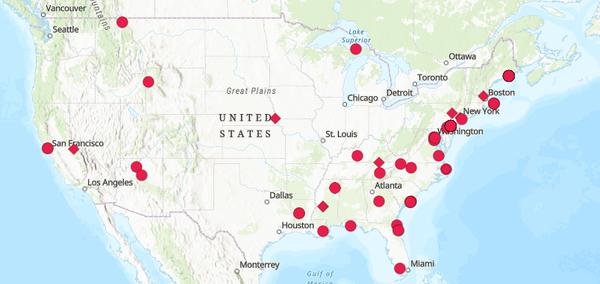
One year after we began, we know that at least 88 signs have been removed or altered across 35 National Park Sites. Some of these censored signs are obvious, and have been widely reported in the news. The most well-known instance of censorship was the removal of 34 panels at the President’s House site in Philadelphia. But a recent court filing in National Parks Conservation Association v. Department of the Interior revealed a new list of partial signs.
News of the ruling dropped while several members of our team were in Washington D.C. Armed with the new spreadsheet and our SOS Archive, we set off on a sign-hunting quest.
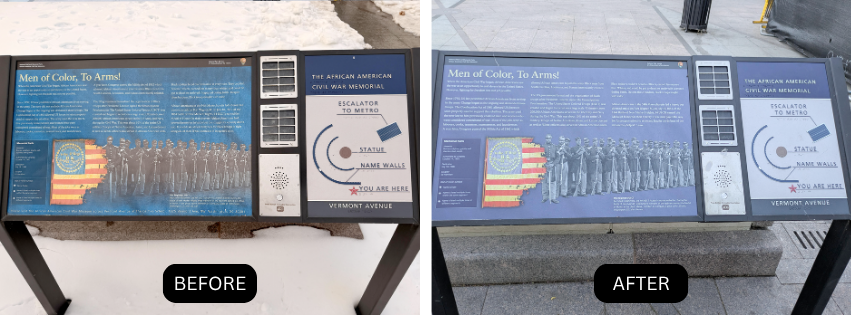
By the end of our trip, we had documented these changes:
African American Civil War Memorial:
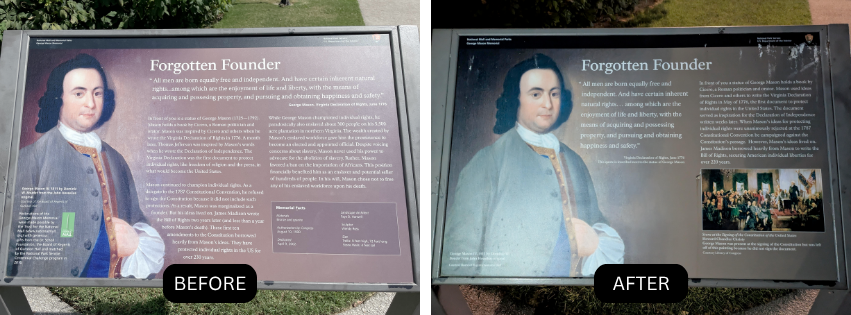
George Mason Memorial, part of National Mall and Memorial Parks:
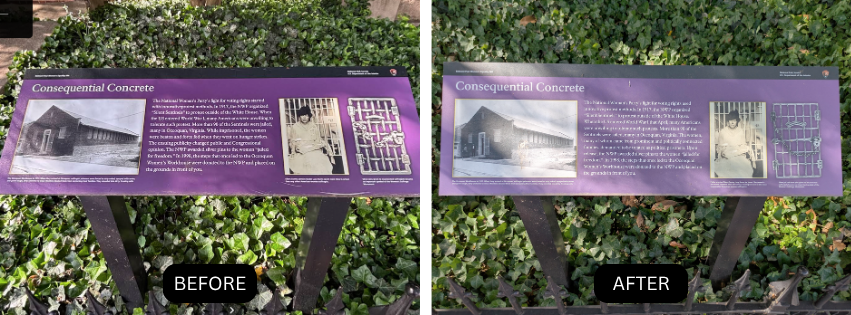
Belmont-Paul Women's Equality National Monument:
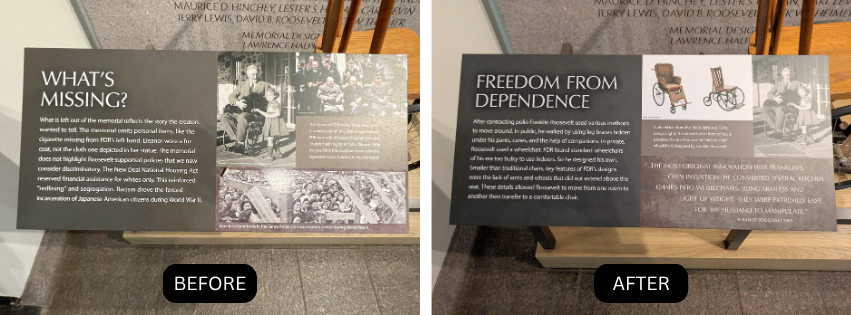
Franklin Delano Roosevelt Memorial:
Interact with and view the details of the exact changes to these signs in our new StoryMap: Documenting Censorship in the National Parks.
We are already grieving the deeply disturbing removals at the President’s House. But witnessing these changes to signs in our nation’s capital delivered another emotional blow.
Our visits to censored sites revealed the profound consequences of “restoring truth and sanity to American history.” The new sign at the George Mason Memorial celebrates his role as a founder and champion of individual rights, while omitting any mention of his role as a slave holder. The revised exhibit panel at the FDR Memorial emphasizes his ingenious design of a wheelchair, but eliminates any mention of the structural racism baked into New Deal housing programs. The African American Civil War Memorial asserts that “Black troops fought with valor” but no longer explains that “it would take almost 100 years for Black troops to fight alongside their White comrades in integrated units.”
This censorship campaign is erasing fact-based narratives that illuminate the complexities of our national story. Despite profound budget scarcity, NPS leadership is expending significant resources to bury the most up-to-date scholarly interpretations of the past. These newly installed signs ignore the paradox of slavery and freedom in the founding of this nation, the pain inflicted by Jim Crow, and the hard-fought battle over women’s suffrage. Save Our Signs seeks to document these changes to historical interpretation, shining a light on these signs that makes censorship visible.
What other signs have been replaced? We need your help to find out.
Do you live near one of the reported sites where a sign has been removed, but we don’t yet have before-and-after photos in the SOS Archive? Can you visit, or look through old photographs to see what you can find?
Can you look at the leaked NPS dataset, which tells us which signs are most likely to be at risk? Can you check on the signs listed there, to see if they are gone or changed?
And, can you take photographs to document this censorship, and submit them to our community archive, at saveoursigns.org?
We need you to step up again. Together, we can document and resist this campaign of censorship.